France is the fourth most forested country in Europe, with approximately 17 million hectares of forest covering 31% of the mainland. This is more forest than at any time since the Middle Ages — reforestation has been one of France's quiet environmental success stories, reversing centuries of deforestation that peaked in the early 19th century.
| French Forests in Numbers | Detail |
|---|---|
| Total forest area: ~17 million hectares (31% of mainland) | |
| Broadleaf trees: 67% of forest area (oak dominant) | |
| Coniferous trees: 21% | Mixed: 12% |
| Public forests (ONF-managed): 4.7 million hectares (27%) | |
| Private forests: 12.3 million hectares (73%) — 3.5 million owners | |
| Tree species: Oak (41% of standing volume), beech (12%), spruce (8%), maritime pine (7%) | |
| Annual growth exceeds harvest by roughly 30% |

Major Forest Types
Oak Forests
The backbone of French forestry. Le chêne (the oak) — particularly sessile oak and pedunculate oak — dominates lowland and mid-altitude forests across most of the country. These are the forests that supplied France's naval fleets, heated its cities, and built its wine barrels. Today, the finest oak forests (Tronçais in the Allier, Bercé in the Sarthe) supply cooperages that make barrels for Bordeaux and Burgundy.
Beech Forests
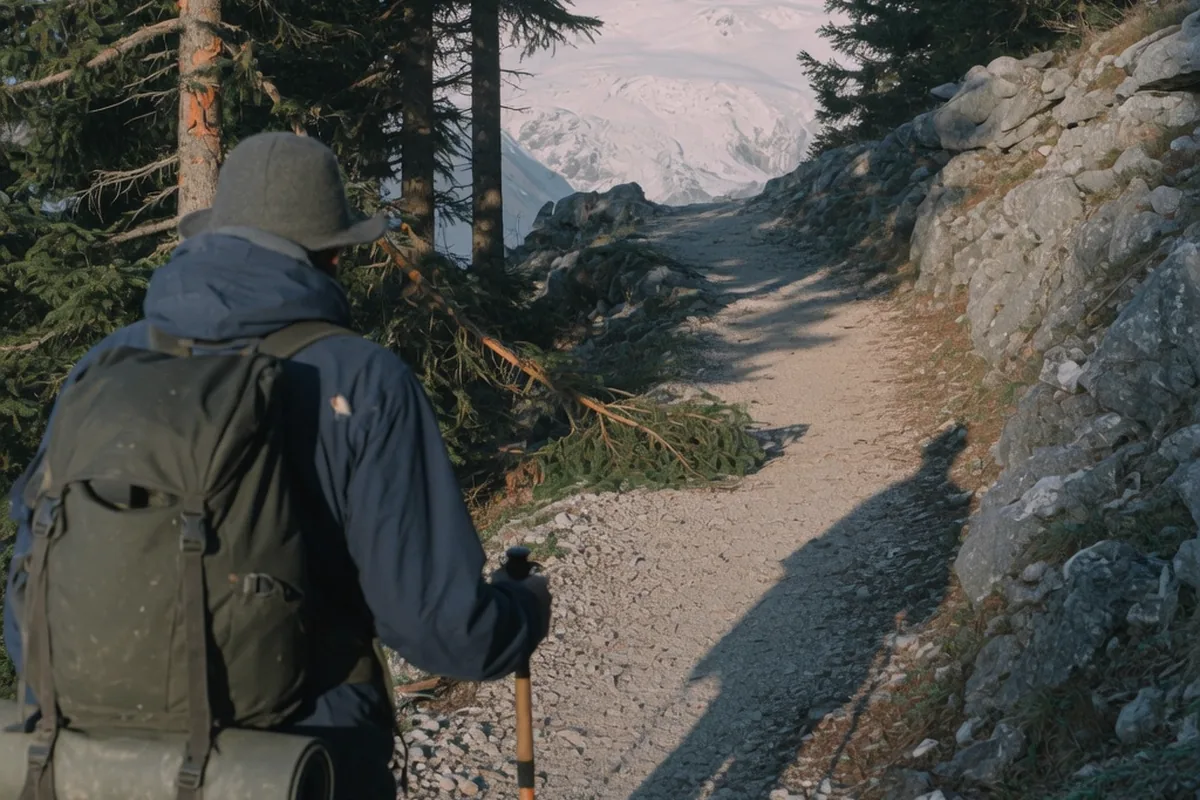
Le hêtre (the beech) thrives in cooler, moister uplands — the Vosges, Jura, Pyrenees foothills, and northern slopes of the Massif Central. Beech forests are cathedral-like: tall, smooth-barked columns, dense canopy blocking most light, sparse undergrowth. The Forêt d'Iraty in the western Pyrenees claims to be Europe's largest beech forest.
Pine Forests
- Maritime pine (pin maritime (maritime pine)): The Landes forest, south of Bordeaux, is Europe's largest artificial forest — one million hectares planted in the 19th century to stabilise coastal dunes. Lightning-straight rows of pine, sandy floor, intense resinous scent.
- Scots pine: Common in the Massif Central and dry limestone plateaus.
- Mountain pine, larch, and spruce: Dominate Alpine and Pyrenean forests above 1,000 m.
Mediterranean Forests
Lower, tougher, fire-adapted. Les chênes verts (holm oaks) and cork oaks, Aleppo pine, and dense understorey of rosemary, thyme, and cistus. These forests merge into maquis (dense scrub) and garrigue (low aromatic scrub) in drier areas. Fire is their defining challenge — tens of thousands of hectares burn every summer.
Iconic Forests
- Fontainebleau (20,000 ha): France's most famous forest, south of Paris. Ancient oaks, sandstone boulders (world-class bouldering), Impressionist painters, royal hunting grounds.
- Compiègne (14,400 ha): Where the 1918 Armistice was signed — in a railway carriage in a forest clearing.
- Forêt de Tronçais (11,000 ha): The finest oak plantation in Europe, planted by Colbert in 1670 for future naval timber.
- Forêt de Brocéliande (Paimpont, Brittany): The legendary forest of Arthurian legend — Merlin's tomb, the Val sans Retour.
The ONF — Managing France's Public Forests
The Office National des Forêts (National Forestry Office) manages 4.7 million hectares of public forest. Founded in 1964, the ONF balances timber production, biodiversity conservation, public recreation (250 million visits/year), and climate resilience. French forestry operates on cycles of 120–200 years — a tree planted today is harvested by someone not yet born.
Accommodation in the Countryside — Stay in forest lodges, gîtes, and rural retreats across France — on La Porte.
On the ground
| Pin | Working note |
|---|---|
| Page | Forests of France |
| Desk | La Terre |
| First use | Read the pins, then one related page — not five |
| Confirm | Official site or ticket desk the week you go |
Forests of France is a working page on La Terre, not a souvenir. Use it with the week you travel. Forests of France sits in a country that is easy to over-plan and easy to under-prepare. The flora layer is where visitors collect names. This page is the opposite: what to do first, what to skip, and which sibling guide holds the rest.
France rewards a slow unit. One arrondissement, one valley, one appellation, one park trail. The photograph of five landmarks in five days is a real holiday, and it is also a queue with a passport. If you only have three nights, spend two of them in the same bed. The third night is for a train, not a third hotel.
Working a visit
Practical France is sockets (Type E/F, 230 V), tap water that is safe, pharmacies that are the real clinic for minor trouble, and a lunch hour that still closes a village. Cards work in cities. Cash still opens some park kiosks, some island boats, and some market stalls that have never seen contactless. A lightweight adapter belongs in the personal item, not the hold.
We will not write as if every reader is on a gap year, or as if every reader is in a palace hotel. We will not flatten 'the south' into one climate. We will not treat a strike day, a jour férié, or a Tuesday museum closure as a personality quirk of the French. They are calendars. Check them. Then use Forests of France as a pin, not as scripture.
Cross the five guides instead of cloning them. La Porte holds trains and the first week. La Terre holds weather and park gates. L'Esprit holds museum Tuesdays and the Revolution. La Table holds the market morning and the wine list. Le Moteur holds the Tour, the working week, and why August is empty in Paris and full on the coast.