Walk any hillside in Provence, Languedoc, or Corsica in summer and you'll understand these landscapes through your nose before your eyes. The air is thick with the scent of rosemary, thyme, lavender, and cistus — the aromatic signature of France's Mediterranean scrublands. These are the maquis (dense, tall scrubland) and garrigue (low, open aromatic scrub) — two distinct but related plant communities that define the southern French landscape.
| Maquis and Garrigue | Detail |
|---|---|
| Garrigue: Low (under 1 m), open scrub on limestone — herbs, small shrubs, exposed rock | |
| Maquis: Dense, tall (1–4 m) scrub on acidic (siliceous) soils — heather, cistus, arbutus | |
| Combined area: Approximately 2.5 million hectares in southern France | |
| Fire frequency: Major fires every 25–50 years (natural cycle, worsened by climate change) | |
| Key fragrance plants: Rosemary, thyme, oregano, lavender, sage, savory | |
| Corsican maquis: Famously dense — gave its name to the WWII resistance fighters |

Garrigue — Limestone Scrub
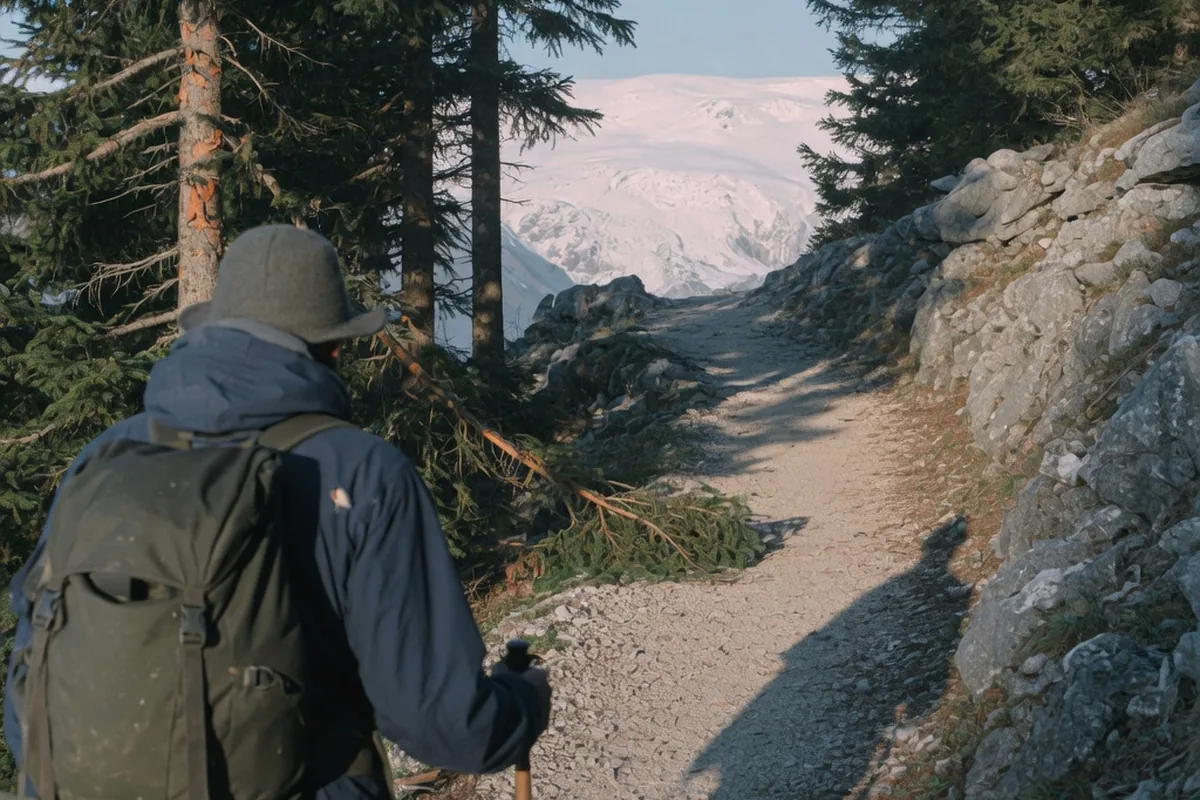
La garrigue (garigue) grows on the limestone hills of Provence, Languedoc, and the Causses. It's a low, open, sun-blasted landscape — white rock, small aromatic shrubs, scattered holm oaks, and a buzz of insects. The air shimmers with heat and essential oils.
Key Garrigue Species
- Thyme (thym (thyme)) — low cushions on rocky ground
- Rosemary (romarin (rosemary)) — woody shrubs to 1.5 m, blue flowers in winter
- Kermes oak — a dwarf evergreen oak, knee-high, spiny-leaved
- Cistus (rock rose) — white and pink papery flowers that bloom and drop in a single day
- Asphodels — tall white flower spikes that carpet abandoned terraces in spring
- Jerusalem sage (phlomis (phlomis)) — woolly grey-green leaves, yellow whorls
Garrigue typically forms where forest has been cleared (by humans, fire, or grazing) on calcareous soils. With continued disturbance, it remains open; left alone, it slowly succeeds back to holm oak woodland.
Maquis — Siliceous Scrub
Le maquis (maquis) is denser, taller, and grows on acidic soils — granite, schist, and sandstone. It dominates Corsica, the Maures massif (Var), and parts of the Pyrenees Orientales.
Key Maquis Species
- Arbutus (strawberry tree) — red-barked, with edible red fruits (used for jam and liqueur)
- Tree heather (bruyère arborescente (tree heather)) — tall, white-flowering, with woody trunks harvested for briar pipes
- Myrtle (myrte (myrtle)) — dark berries used in Corsican liqueur
- Lentisk (mastic tree) — evergreen, resinous, impenetrably dense
- Cistus — shared with garrigue, but here reaching 2 m tall in the humid maquis
Corsican maquis is legendarily dense — Napoleon claimed he could smell Corsica from the sea through its aromatics. During World War II, resistance fighters hid in the maquis, giving the movement its name: les Maquisards (the Resistance fighters).
Fire Ecology
Both maquis and garrigue are fire-adapted landscapes. Many species have evolved to survive or exploit fire:
- Cistus: Seeds germinate only after fire; a burnt hillside explodes with cistus seedlings the following spring
- Cork oak: Thick bark protects the tree; it resprouts after fire
- Aleppo pine: Serotinous cones open with heat, releasing seeds onto freshly cleared ground
But fire intensity and frequency are increasing with climate change and summer drought. The combination of dense, oily vegetation, strong winds (Mistral, Tramontane), and Mediterranean summer heat creates extreme fire conditions. The 2003, 2016, and 2022 fire seasons were particularly destructive.
Garrigue Cuisine
The garrigue isn't just landscape — it's the pantry of Provençal cooking:
- Herbes de Provence (Provence herbs) — the classic blend of thyme, rosemary, oregano, savory (and sometimes lavender)
- Wild asparagus — foraged in spring from garrigue edges
- Capers — from the caper bush that grows in old stone walls
- Honey — garrigue honey (thyme, rosemary, lavender) is among France's finest
Provence Region — Travel through the garrigue and maquis landscapes of Provence — on La Porte.
On the ground
| Pin | Working note |
|---|---|
| Page | Mediterranean Maquis and Garrigue |
| Desk | La Terre |
| First use | Read the pins, then one related page — not five |
| Confirm | Official site or ticket desk the week you go |
If another France InfoBuffoon guide owns the beat — a park gate, a museum Tuesday, a wine list — we send you there instead of duplicating a thinner copy here. Mediterranean Maquis and Garrigue sits in a country that is easy to over-plan and easy to under-prepare. The flora layer is where visitors collect names. This page is the opposite: what to do first, what to skip, and which sibling guide holds the rest.
France rewards a slow unit. One arrondissement, one valley, one appellation, one park trail. The photograph of five landmarks in five days is a real holiday, and it is also a queue with a passport. If you only have three nights, spend two of them in the same bed. The third night is for a train, not a third hotel.
Working a visit
Practical France is sockets (Type E/F, 230 V), tap water that is safe, pharmacies that are the real clinic for minor trouble, and a lunch hour that still closes a village. Cards work in cities. Cash still opens some park kiosks, some island boats, and some market stalls that have never seen contactless. A lightweight adapter belongs in the personal item, not the hold.
We will not write as if every reader is on a gap year, or as if every reader is in a palace hotel. We will not flatten 'the south' into one climate. We will not treat a strike day, a jour férié, or a Tuesday museum closure as a personality quirk of the French. They are calendars. Check them. Then use Mediterranean Maquis and Garrigue as a pin, not as scripture.
Cross the five guides instead of cloning them. La Porte holds trains and the first week. La Terre holds weather and park gates. L'Esprit holds museum Tuesdays and the Revolution. La Table holds the market morning and the wine list. Le Moteur holds the Tour, the working week, and why August is empty in Paris and full on the coast.