No image says "Provence" more powerfully than rows of purple lavender stretching to the horizon under a cobalt sky. But France's floral wealth extends far beyond lavender — from the orchid meadows of the Causses to the Alpine wildflower carpets above the treeline, from the poppy fields of northern France to the mimosa-draped hillsides of the Côte d'Azur.
| Lavender in Numbers | Detail |
|---|---|
| Lavender-growing area: ~20,000 hectares in Provence | |
| Peak bloom: Late June to early August (altitude-dependent) | |
| Key varieties: True lavender (Lavandula angustifolia, 600–1,400 m), Lavandin (L. x intermedia, lower altitudes) | |
| Essential oil production: France produces ~50 tonnes/year of true lavender oil, ~1,000 tonnes of lavandin oil | |
| Best viewing: Plateau de Valensole, Abbaye de Sénanque, Sault, the Drôme Provençale | |
| Economic value: ~€50 million/year to the Provence economy |

Lavender — The Icon
True Lavender vs. Lavandin
A distinction that matters: true lavender (lavande fine (fine lavender)) grows above 600 m, has a delicate, complex scent, and is used in perfumery and aromatherapy. Lavandin is a hybrid that grows at lower altitudes, produces 5–10× more essential oil per hectare, but has a sharper, more camphoraceous scent. Lavandin dominates visually — the famous rows on the Plateau de Valensole are lavandin.
The Lavender Calendar
- Late May–June: Fields turn from grey-green to purple as buds develop
- Late June–early July: Peak colour at lower altitudes (Valensole, 600 m)
- Mid-July–early August: Peak at higher altitudes (Sault, 700–1,000 m)
- August: Harvest begins — the combine harvesters cut the rows and distilleries fill the air with concentrated scent
Where to See Lavender
- Plateau de Valensole (Alpes-de-Haute-Provence): The postcard rows — vast fields, photogenic farmhouses, sunrise shoots
- Abbaye de Sénanque (Vaucluse): Cistercian abbey with lavender in the foreground — possibly France's most photographed scene
- Sault (Vaucluse, 765 m): Higher altitude, later bloom, annual lavender festival (15 August)
- The Drôme Provençale: Less touristed, equally beautiful, with distillery visits
Wildflowers of France
Alpine Meadows
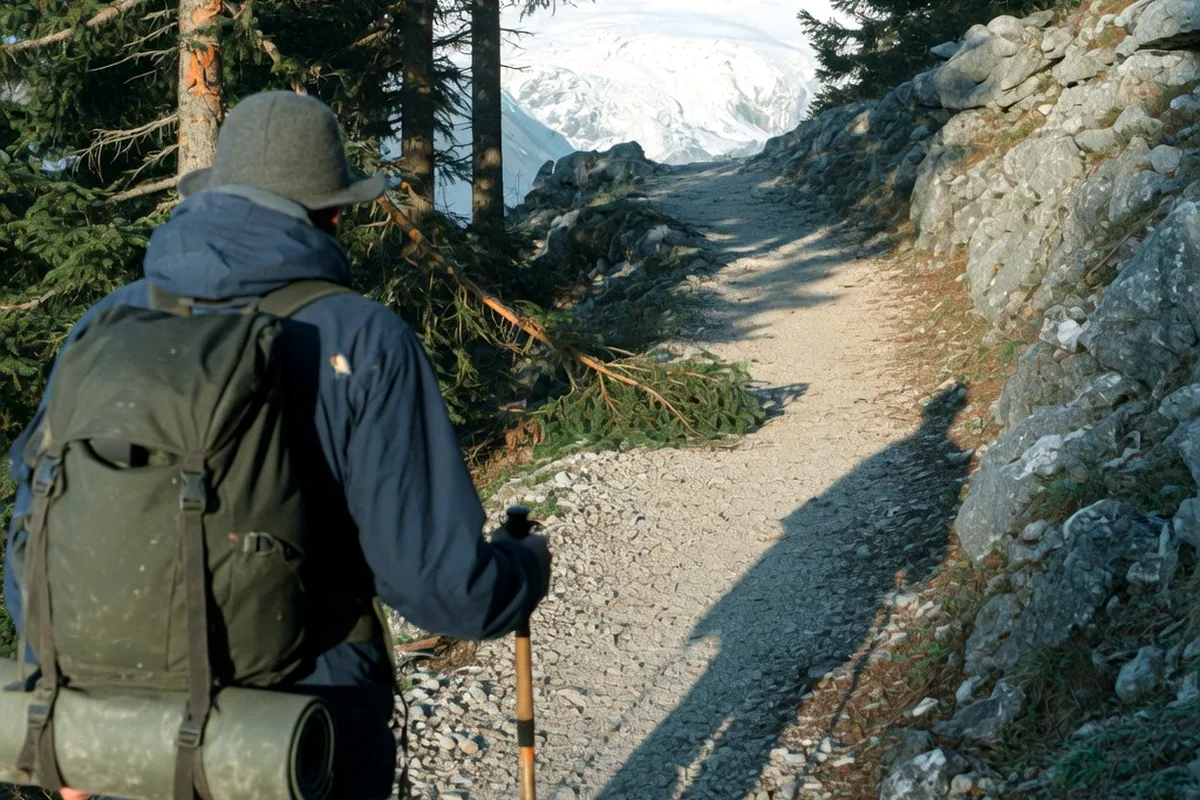
Above the treeline (1,800–2,500 m), the Alps and Pyrenees produce some of Europe's richest wildflower displays. Peak season: June–July. Key species:
- Gentians (blue, yellow, purple) — the gentiane jaune (yellow gentian) is used to make the bitter Auvergnat aperitif
- Edelweiss — rare and protected, found above 1,800 m
- Alpine asters, arnica, soldanellas — burst through snowmelt in early summer
- The Vanoise and Écrins national parks are the best locations
Orchids of the Causses
The limestone Causses plateaus of the southern Massif Central host over 70 species of wild orchid — one of the highest concentrations in Western Europe. The Causse Méjean, Causse Noir, and Grands Causses are hotspots.
Mediterranean Wildflowers
Spring (March–May) is the Mediterranean wildflower season — before summer heat dries everything:
- Poppies (coquelicots (poppies)) — fields of scarlet across the south
- Cistus (rock rose) — white and pink flowers carpet the garrigue
- Broom (genêt (broom)) — blazing yellow in May
- Mimosa — the Côte d'Azur erupts in yellow from January to March
Northern France
- Poppy fields in Picardy and the Somme — poignant among WWI memorials
- Bluebell woods in Normandy and Brittany (April–May)
- Rapeseed (colza (rapeseed)) — vast yellow fields across the Paris Basin in April–May
Provence Lavender Route — Drive the lavender route — Valensole, Sénanque, Sault, and the distilleries — on La Porte.
On the ground
| Pin | Working note |
|---|---|
| Page | Lavender and Wildflowers of France |
| Desk | La Terre |
| First use | Read the pins, then one related page — not five |
| Confirm | Official site or ticket desk the week you go |
Lavender and Wildflowers of France is a working page on La Terre, not a souvenir. Use it with the week you travel. Lavender and Wildflowers of France sits in a country that is easy to over-plan and easy to under-prepare. The flora layer is where visitors collect names. This page is the opposite: what to do first, what to skip, and which sibling guide holds the rest.
France rewards a slow unit. One arrondissement, one valley, one appellation, one park trail. The photograph of five landmarks in five days is a real holiday, and it is also a queue with a passport. If you only have three nights, spend two of them in the same bed. The third night is for a train, not a third hotel.
Working a visit
Practical France is sockets (Type E/F, 230 V), tap water that is safe, pharmacies that are the real clinic for minor trouble, and a lunch hour that still closes a village. Cards work in cities. Cash still opens some park kiosks, some island boats, and some market stalls that have never seen contactless. A lightweight adapter belongs in the personal item, not the hold.
We will not write as if every reader is on a gap year, or as if every reader is in a palace hotel. We will not flatten 'the south' into one climate. We will not treat a strike day, a jour férié, or a Tuesday museum closure as a personality quirk of the French. They are calendars. Check them. Then use Lavender and Wildflowers of France as a pin, not as scripture.
Cross the five guides instead of cloning them. La Porte holds trains and the first week. La Terre holds weather and park gates. L'Esprit holds museum Tuesdays and the Revolution. La Table holds the market morning and the wine list. Le Moteur holds the Tour, the working week, and why August is empty in Paris and full on the coast.